How was this generated?
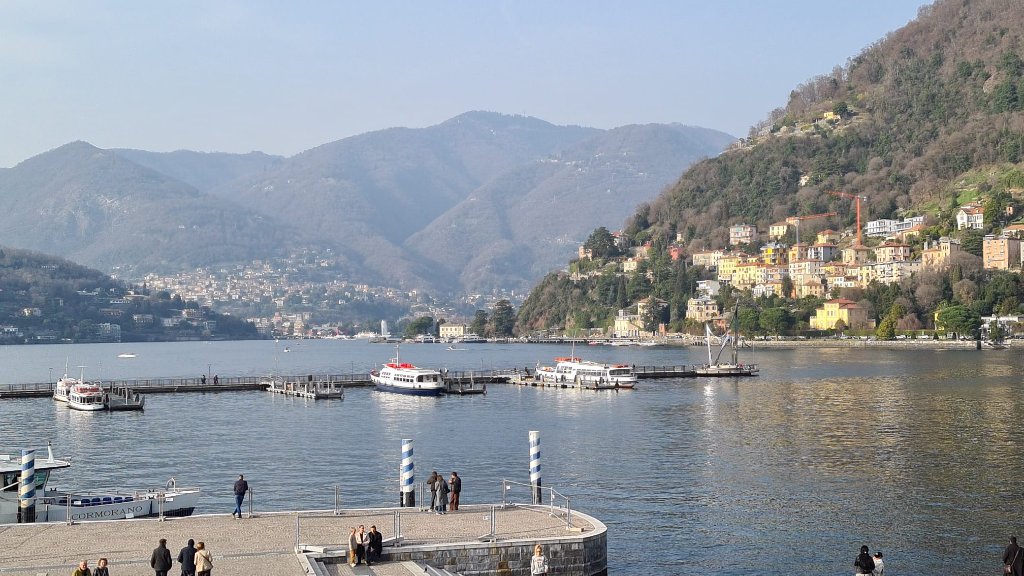
A wide-angle landscape photograph of a lakefront town nestled in the foothills of large mountains. The scene captures a busy harbor with several boats and ferries docked at piers, and people walking on a paved promenade in the foreground. The town's buildings are built into the steep, tree-covered hillside on the right, while more distant mountains fade into the haze. The water is calm, reflecting the sky and buildings.
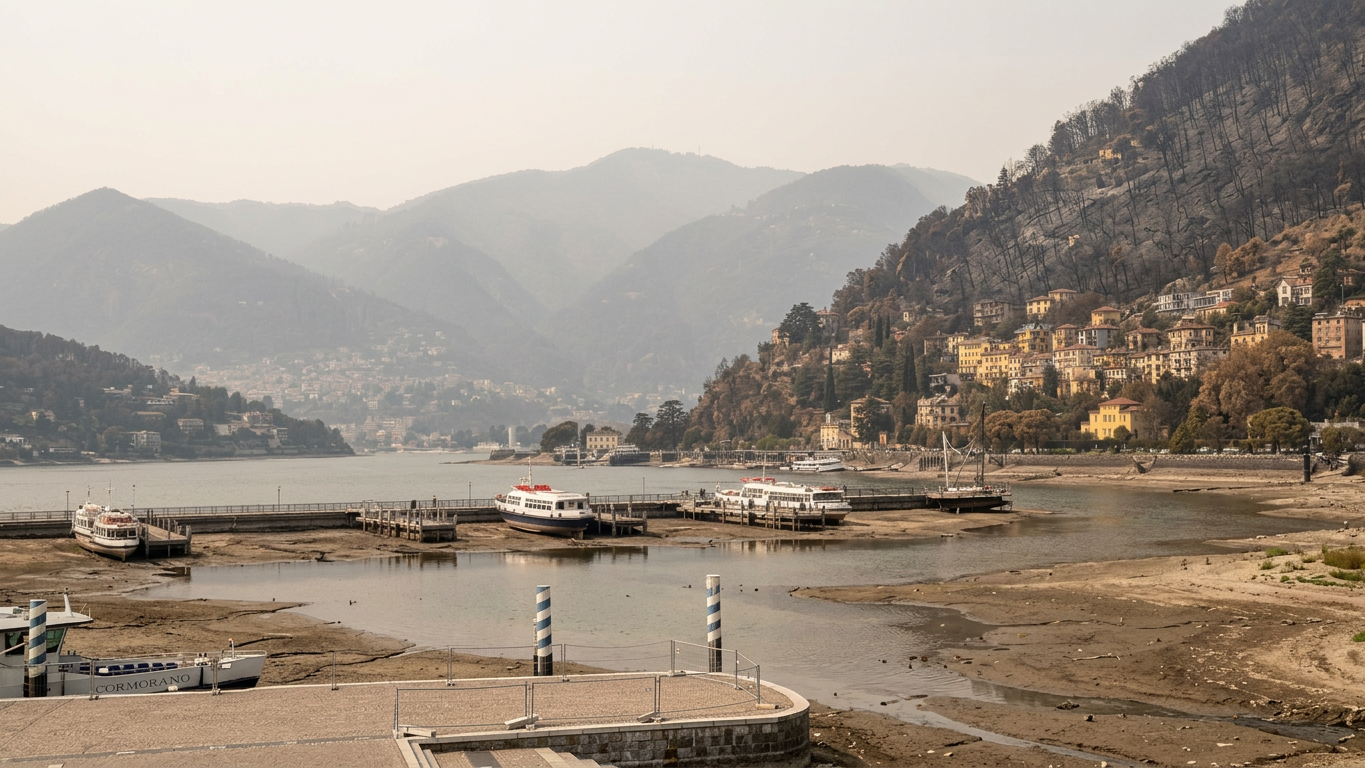
Long-term fire damage is severe, with extensive charred trunks, standing dead timber, heavy ash deposition, and low-visibility haze. Through the haze, the treeline shows patches where fire has stripped foliage to bare blackened trunks. The local ecosystem is transitioning: legacy species are stressed, replacement vegetation is spreading unevenly, and canopy structure looks altered. Salt-tolerant and heat-tolerant species are displacing older shoreline vegetation patterns. The canopy mix is uneven, with stressed mature trees alongside aggressive replacement growth. Dry conditions are evident in cracked soil patches, faded planting, and reduced water levels. Shrubs and lawn areas appear stressed and patchy under a pale, dry sky. The shoreline has receded, exposing dry cracked mudflats where water once lapped. Many trees show brown, dying branches and thinning canopy. Visible water features — ponds, fountains, channels — are nearly empty, their beds cracked and exposed.