How was this generated?
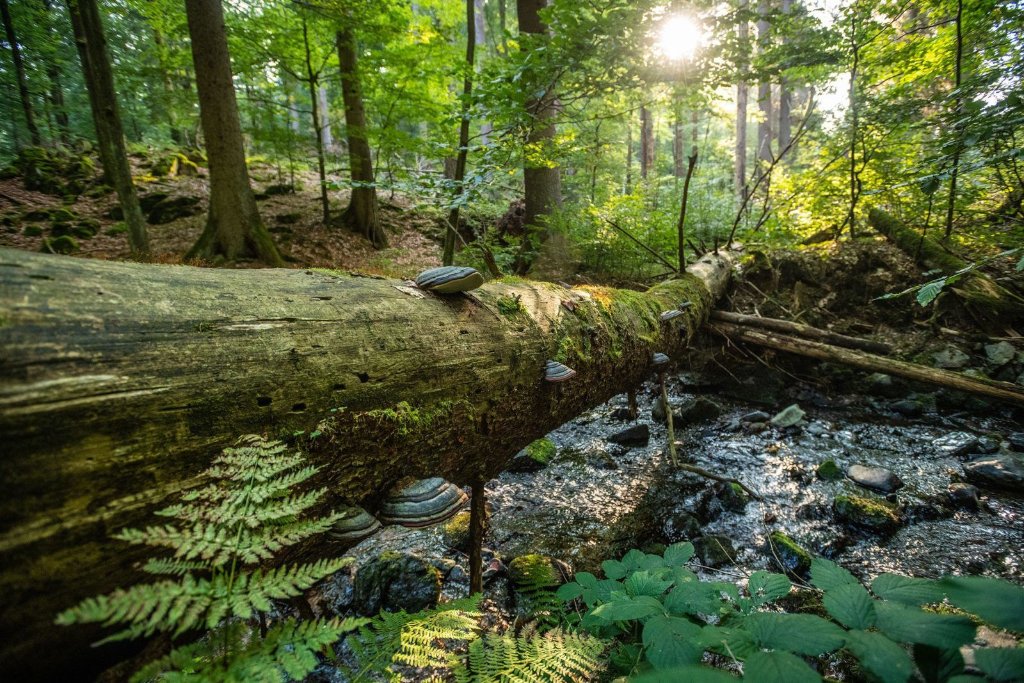
This photograph captures a dense, natural forest setting, likely rural, where a large, moss-covered log has fallen across a shallow, rocky stream. The scene is illuminated by bright sunlight filtering through the dense canopy of trees, suggesting a pleasant time of day, possibly morning or afternoon. ```json
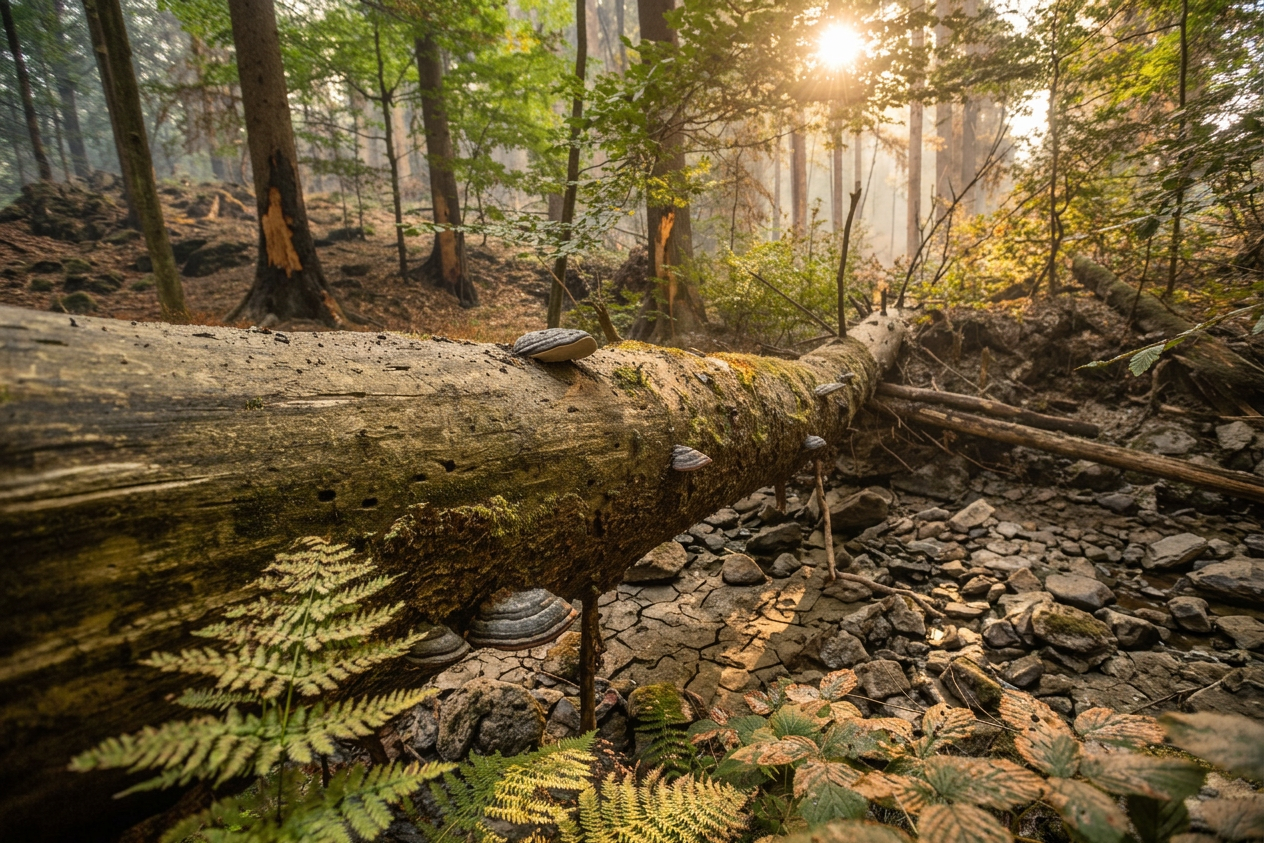
This is a photograph of a real place. Edit this photo to show what this exact location could look like in the year 2050 under projected conditions. Keep all buildings, roads, infrastructure, signage, and the camera angle exactly as they are. Do not add, remove, or reshape structures. Only introduce effects that are directly visible in a single photo: water levels, wetness, vegetation stress, haze, storm runoff, smoke, or surface condition changes. Transform the environment to realistically show these overlapping conditions together in one coherent scene: Smoke from a nearby fire event drifts into the scene, lowering contrast and tinting the light warm. Fine ash has begun settling on exposed surfaces. Surrounding hillsides show patches of scorched brown, and the air is thick with haze. Through the haze, the treeline shows patches where fire has stripped foliage to bare blackened trunks. Open ground looks dry and hardened, and vegetation shows visible heat stress with browning edges and drooping leaves. A noticeable heat haze shimmers over dark paved surfaces. Open fields are baked dry, crops are visibly stressed, and the earth is hard-packed and pale. The tree canopy droops heavily, leaves curling inward from the heat. The open landscape offers no shade from the unrelenting sun. Dry conditions are evident in cracked soil patches, faded planting, and reduced water levels. Shrubs and lawn areas appear stressed and patchy under a pale, dry sky. Farmland stretches out parched and cracked, irrigation channels run dry. Many trees show brown, dying branches and thinning canopy. Visible water features — ponds, fountains, channels — are nearly empty, their beds cracked and exposed. Make the changes visible but plausible for the year 2050, not like a disaster movie or a post-apocalyptic scene. Do not add text, watermarks, or overlay graphics.