How was this generated?
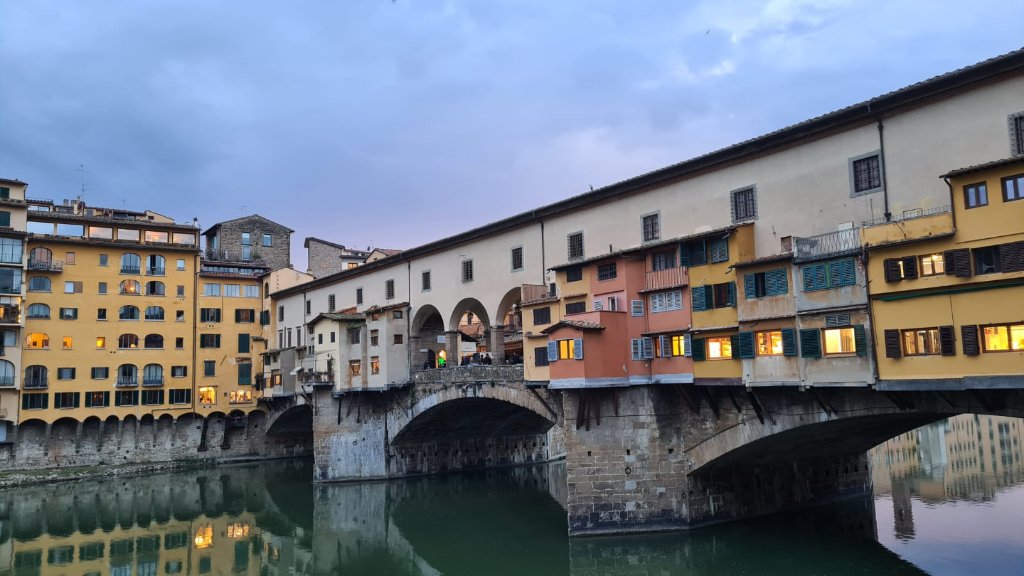
A view of the Ponte Vecchio bridge in Florence, Italy, spanning the Arno River at dusk. The bridge is lined with colorful buildings, and their lights are reflected in the water. The sky is a deep blue with some clouds.
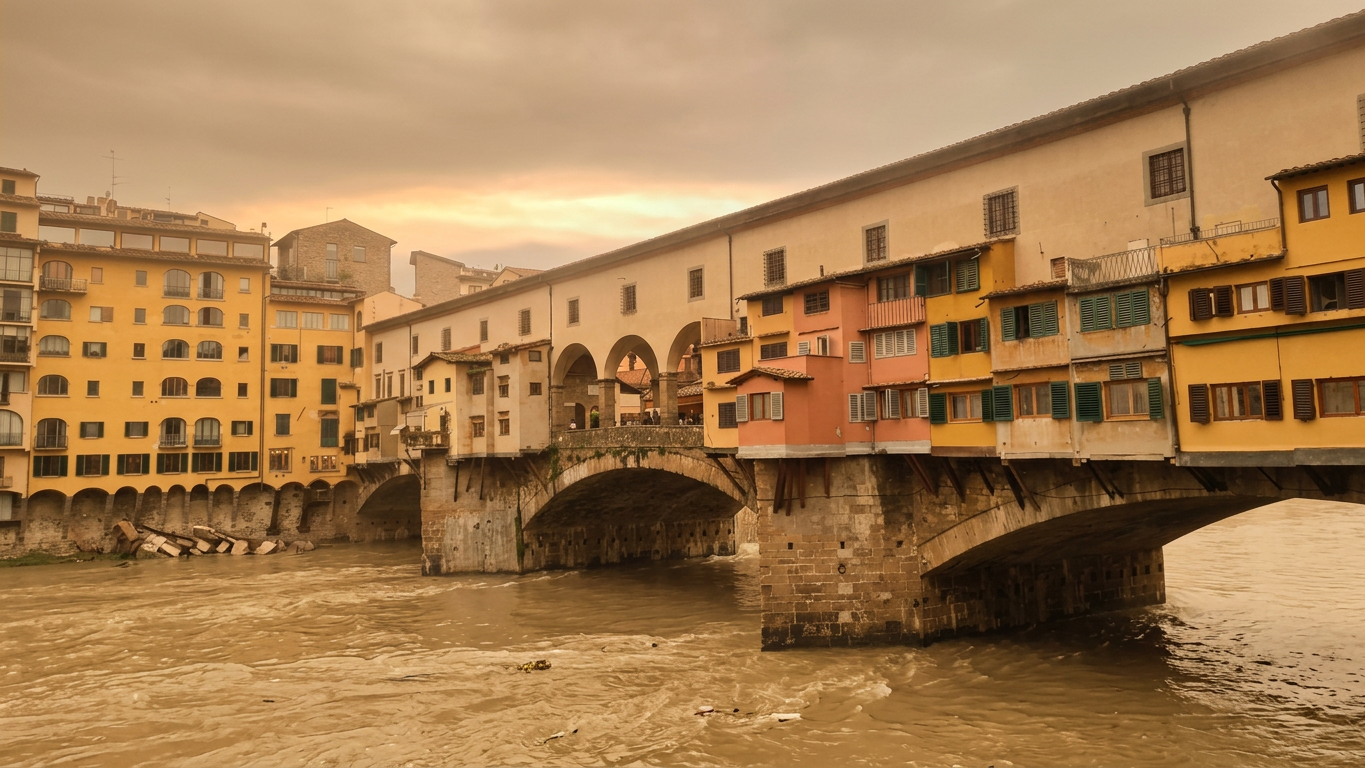
This is a photograph of a real place. Edit this photo to show what this exact location could look like in the year 2150 under projected conditions. Use an acute extreme-event framing (storm, flood, smoke, or heatwave impact) layered on top of the chronic baseline conditions. Keep all buildings, roads, infrastructure, signage, and the camera angle exactly as they are. Do not add, remove, or reshape structures. Only introduce effects that are directly visible in a single photo: water levels, wetness, vegetation stress, haze, storm runoff, smoke, or surface condition changes. Transform the environment to realistically show these overlapping conditions together in one coherent scene: Severe coastal erosion has reshaped the waterfront, with collapsed edges, major beach loss, and exposed protective structures. Seafront embankments show undermining and patch repairs where repeated erosion has stripped supporting ground. Waterline features are receding or collapsing, with broken edge habitat and retreating shore cover. High-energy wave conditions are actively removing shoreline material and destabilizing coastal edges. Water levels sit slightly higher than expected, with a clearer high-water line on quays, embankments, or sea walls. The lowest edges of the scene look damp and occasionally waterlogged. Water has pushed inland from the waterfront, pooling around traffic islands and flowing along tram tracks. Existing waterways have overtopped their banks, merging with the rising floodwater. Water is actively encroaching during an exceptional high-water event, with dynamic surge patterns and active overtopping. The light feels warmer and harsher, with a slight heat haze softening distant detail. Vegetation looks mildly stressed and less lush than usual. Heat radiates from dark asphalt and concrete surfaces, intensified by surrounding buildings trapping and reflecting it. Dense buildings create a canyon effect, trapping heat between facades. The scene is in peak heatwave conditions with intense glare, heat shimmer, and visible thermal stress. Make the changes visible but plausible for the year 2050, not like a disaster movie or a post-apocalyptic scene. Do not add text, watermarks, or overlay graphics.