How was this generated?
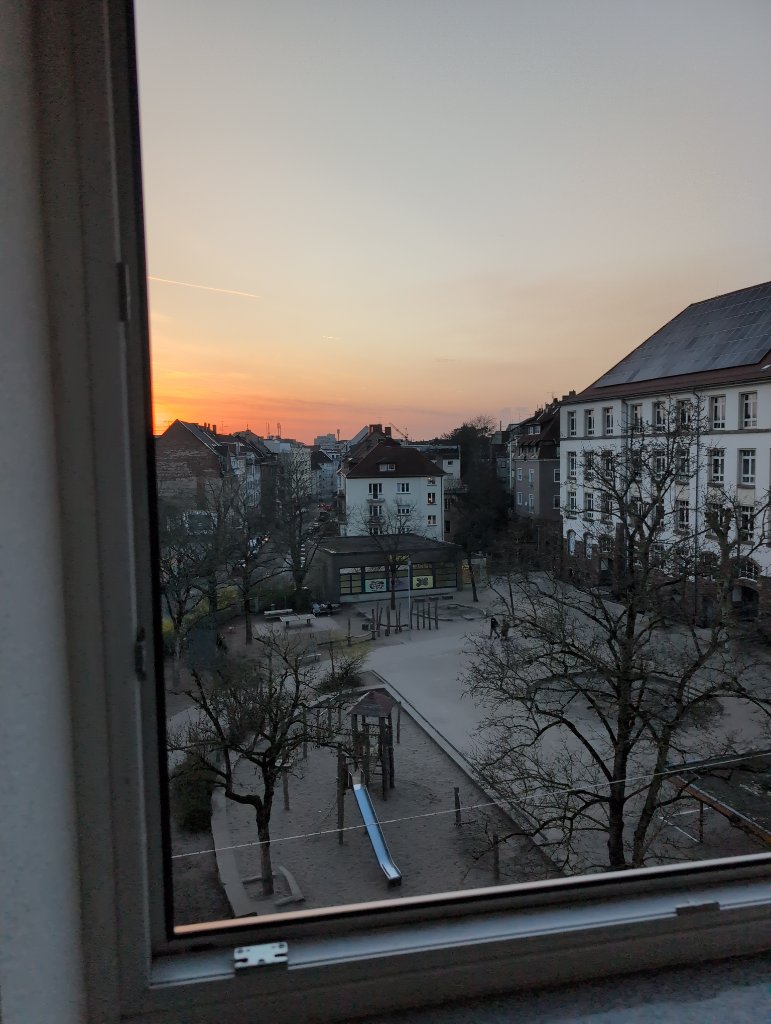
An outdoor urban view taken from an indoor window, looking out over a school playground and surrounding city buildings at sunset. The foreground is dominated by the window frame. The playground has bare trees, a slide, and other equipment on a sand and paved surface. Buildings of varying heights and styles, including a large multi-story school building, are visible under a clear sky with a distinct orange sunset glow on the horizon.
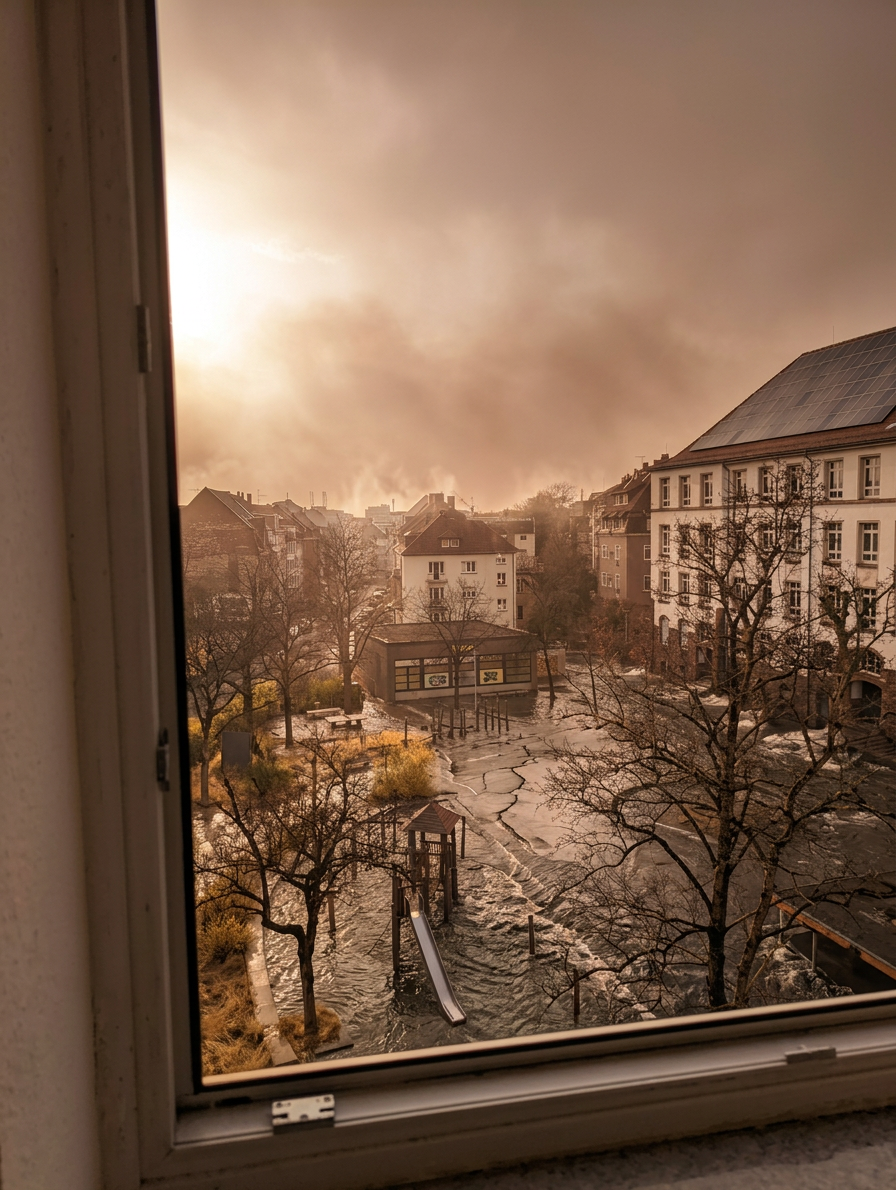
This is a photograph of a real place. Edit this photo to show what this exact location could look like in the year 2100 under projected conditions. Use an acute extreme-event framing (storm, flood, smoke, or heatwave impact) layered on top of the chronic baseline conditions. Keep all buildings, roads, infrastructure, signage, and the camera angle exactly as they are. Do not add, remove, or reshape structures. Only introduce effects that are directly visible in a single photo: water levels, wetness, vegetation stress, haze, storm runoff, smoke, or surface condition changes. Transform the environment to realistically show these overlapping conditions together in one coherent scene: A strong storm is stressing the drainage system, with water pooling across low spots, runoff collecting along kerbs, and surface water lingering longer than usual under dark storm clouds. Stormwater rushes along the gutters, swirling around drain covers. Underground car parks show water pooling at their entrances. Water funnels between tightly packed buildings into fast-moving streams. This moment captures an active severe stormburst with turbulent runoff and rapidly rising surface water. The light feels warmer and harsher, with a slight heat haze softening distant detail. Vegetation looks mildly stressed and less lush than usual. Heat radiates from dark asphalt and concrete surfaces, intensified by surrounding buildings trapping and reflecting it. Dense buildings create a canyon effect, trapping heat between facades. The scene is in peak heatwave conditions with intense glare, heat shimmer, and visible thermal stress. Make the changes visible but plausible for the year 2050, not like a disaster movie or a post-apocalyptic scene. Do not add text, watermarks, or overlay graphics.